
You should reduce plastic from your life and use glass or stainless steel reusable water bottles but how sustainable are they? This post will explain in detail which type of reusable water bottle is the best in sustainability.

This post is sponsored by Klean Kanteen. My opinions are based on the research and facts from sources mentioned in the infographic.
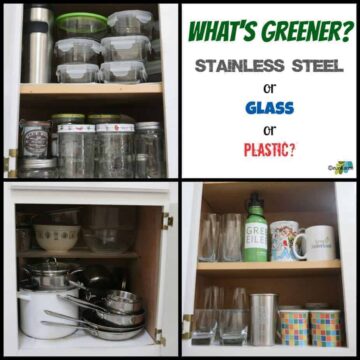
These are my kitchen cabinets. Can you tell I'm obsessed with stainless steel (SS) and glass? Except for Glasslock lids, caps for travel coffee mugs and BPA-free Klean Kanteen water bottle caps, I have very little plastic in my kitchen. Stainless steel and glass have been the 'go-to' materials when I decided to reduce plastic in our lives. Because the life cycle for the two are, well, infinity, unless you lose them or break them, which sadly, we've have done both, they are far more sustainable than plastic.
But 'how' sustainable are glass and stainless steel, really. I wanted to find out since we are all going towards replacing plastic as if SS and glass are going to solve all plastic induced problems. But you know as well as I do that too much demand on one commodity, like steel, can impact the environment by depleting our natural resources as well as creating pollution and a large carbon footprint due to mining, manufacturing and transporting the final products to consumers.
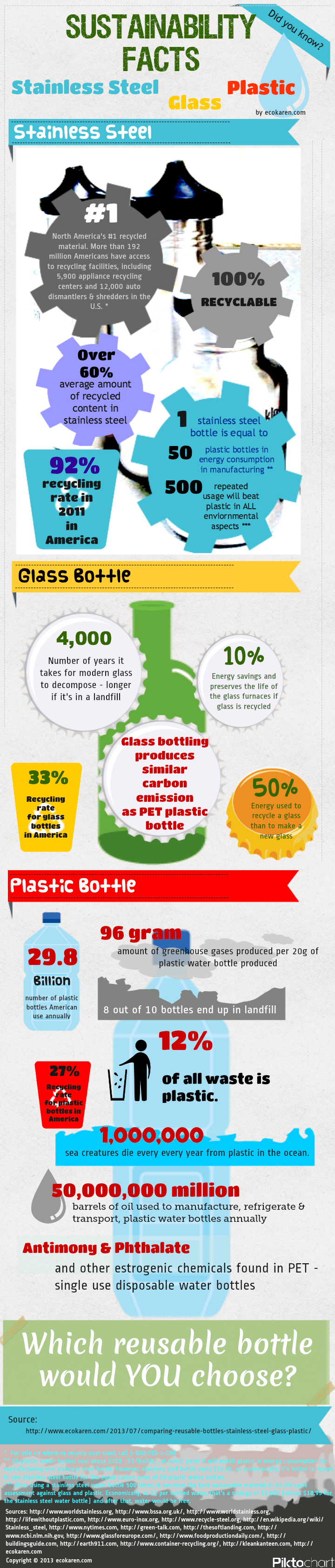
So I did what I usually do when I want to get the 'low down' on something. Research. A lot. And I wanted to share what I found as an infographic - (because it's visual and cool and I know you'll share with all your friends and pin on Pinterest) - with facts from pages of documents and numerous sites that I could get my 'hands' on. It does not contain ALL the facts but I thought these figures were informative enough to convince me - YOU - why I'm sticking with my stainless steel bottles <-- click to find out what brand is my favorite) utensils, mixing bowls, pots and pans.
This is a long one - sustainability is a complicated issue - so grab something to drink and let's dig in.
(Note to self: Get an organizer for the utensils drawer.)
In addition to the infographic below, check out these additional sustainable facts that didn't make it on the chart. After all, sustainability has many faces.
Comparing Reusable Water Bottles on Sustainability: Stainless Steel, Glass, and Plastic {Infographic}
Stainless Steel Sustainability Facts
- Energy intensive - I wouldn't lie to you. From mining to transporting it to our hands for usage, it can be energy intensive. But when you factor in the weight being lighter than glass, the transportation cost is a lot less compared to glass. And the energy cost goes way way down when SS uses more recycled content. Currently though, there aren't enough post-consumer steel to recycle into making new SS so recycled content is less than what it could be. And why is that? That's because we are using them longer so there aren't enough to be recycled. Good problem to have? It's a double edged sword.
- Long lasting life cycle without breakage or corrosion. The main ore for stainless steel (SS) is iron, which is a durable element. (The crystal structure of iron makes Austenitic stainless steel non-magnetic while Ferritic and Martensitic stainless steel magnetic) And to make it harder and corrosion resistant, Chromium is added, which makes it into an alloy, if my chemistry class serves me right. In addition, a small amount of Nickel is added to stabilize the iron structure which makes it stable at extreme temperature. Note: Food grade #304 or 18/8 stainless steel means, there is 18% chromium and 8% nickel. This is a high quality SS that most high quality utensils or stainless steel reusable water bottles, like Klean Kanteen, are made of. And high quality SS means, there is no nickel leaching, which means safer for the consumers. High quality SS bottles should not taste metallic either, unlike aluminum bottles.
- Chromium's passivation property heals itself. A process called passivation makes chromium unique in that when the surface is scratched, it rebuilds itself in the presence of oxygen, which makes stainless steel corrosion resistant, enabling long lasting life cycle, even after it's scratched. Unlike aluminum bottles that need to be lined, SS does not need to be lined because of chromium's unique protective layer that prevents any chemicals from leaching.
- Stainless steel bottle is safer for any areas for usage. Unlike glass, SS bottles can be used by pool side, schools, camps, school trips, gyms, beaches, and any other areas that do not allow fragile glass bottles for safety reasons. SS has no limitation for usage and will not hurt anyone since it does not leach chemicals (as in plastic) or break (as in glass), and possibly cause bodily harm.
- Stainless steel is 100% recyclable: When recycled, each component can be separated and reused. In fact, stainless steel should never end up as a waste. It can be reused time and time again so the sustainability factor beats any other material for it's life cycle being longer than any other material.
- Repeated reuse - Even though energy consumption and carbon print is large, if you use your reusable stainless steel bottle at least 500 times, you would have surpassed the plastic water bottle, in terms of sustainability, making it the best choice for the planet.
So, while stainless steel bottles might require a lot of energy, from mining to manufacturing, and all the way up to the point of usage, its long life cycle, 100% recyclability, and safeness of the material makes SS far more sustainable than glass or plastic. And to offset the carbon print even more, I choose to buy a brand that goes above and beyond to make a difference in the mission of keeping the environmental damage to a minimum. 
And that's Klean Kanteen. This certified B Corp made first BPA free metal reusable bottle and I trust their integrity and transparency. Klean Kanteen makes their mission to make their products ethically, and sustainably with high quality resources. Their well-thought-out designs that are easy to use and to clean and maintain are healthy and safe. If I'm going to buy a product that is going to be inevitably energy intensive, I'm going to make sure the product lasts a very long time and so far, these bottles haven't disappointed me yet! And they are guaranteed for LIFE. How can you get more sustainable than that? ... unless you lose them at the gym. Unfortunately, they can't help you with being absent minded.
Glass Sustainability Facts
- Glass bottling produces similar carbon emission as a PET plastic bottle - manufacturing low weight PET bottle is equivalent to manufacturing a glass bottle, which is heavier, causing carbon emission that's similar to a PET plastic bottle.
- Glass is breakable. Need I say more? For its heavy carbon print, the life cycle is not as long, especially if you break it. And it can be dangerous for kids if they break the glass.
- Not all glasses are recyclable at the curbside. Check Earth 911 on how to recycle broken glass, non-container glasses, and mirrors.
- Recycling rate is surprisingly low, even for those recyclable glasses, not everyone recycle glasses (Gasp!) so there aren't enough glasses available for manufacturing into new products.
- Glass containers are not allowed in some places. Some areas forbid glasses, like pools, schools, sporting events, gym, etc...which makes it hard to use everywhere.
Plastic Sustainability Facts
- Most plastics are derived from petroleum - a non-renewal source.
- Short life cycle - plastic has a very short usable life cycle, especially the single use water bottles, since they are not reusable. And once they are discarded and not recycled, they end up in landfills where they sit over 700 years before they start to decompose.
- Dangerous chemicals leach - Plastic production and manufacturing are extremely polluting and energy-intensive processes. And plastic bottles have been known to leach harmful chemicals into the water. (see infographic)
- Recycling process is complex - Recycling rate for plastic is very low. In addition, not all plastics are recyclable or recycled, even if they are collected to be recycled. Much of it still ends up in landfills or oceans, killing marine life.
So, which material do YOU think is more sustainable? If you are still unsure, here is the infographic for you to check out to determine your answer.
Note: If you would like to use and share this infographic, you can copy and paste the code below the infographic. Be sure to link back to the post for a complete info on sustainability of these reusable bottles.



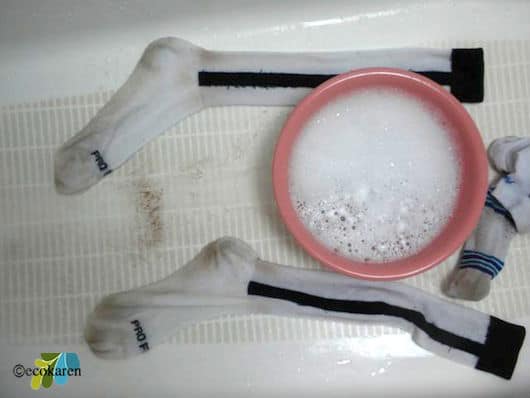
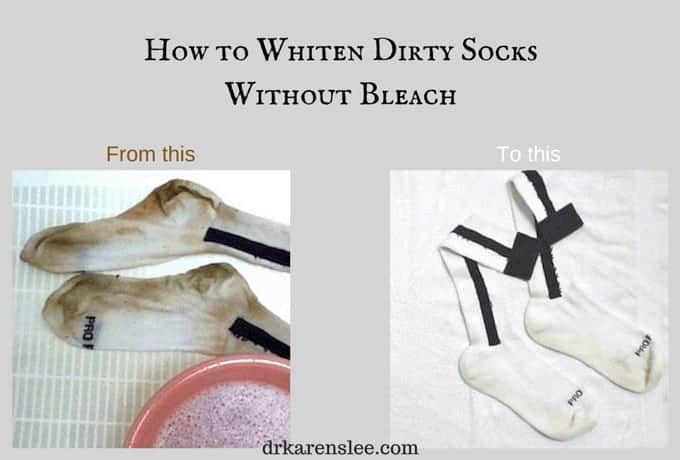 My daughter's softball season is ending. And if your kids play sports, you know how grateful I will be, with all the extra time I'm about to have, not having to do laundry daily, especially the dirty socks.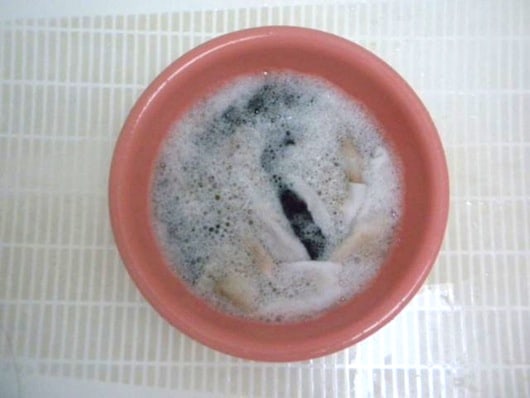





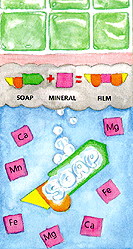 And here is a picture on the left from the ACI to explain what that means. All types of water has minerals. Some has more than others. So even if you don't use soap, you can see the mineral deposits on your splashboards and counters if you have hard (mineral rich) water. Some people have to use water softeners because of the mineral deposits. Have you ever taken a shower and soap never stays on your body? That's hard water.
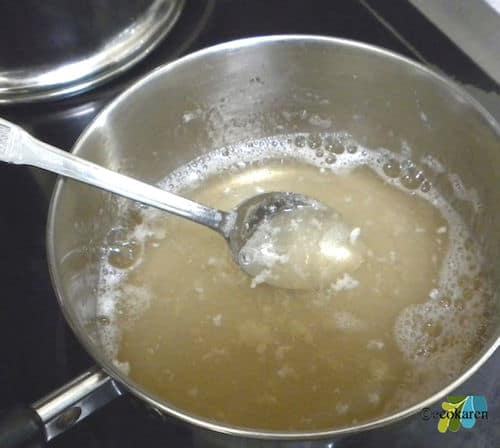 Gently stir until it's melted completely. When melted, cool it in the pan for a few hours or over night. If the mixture is cooled and the consistency is to your liking, pour into the squirt bottle or a mason jar you are going to use.
 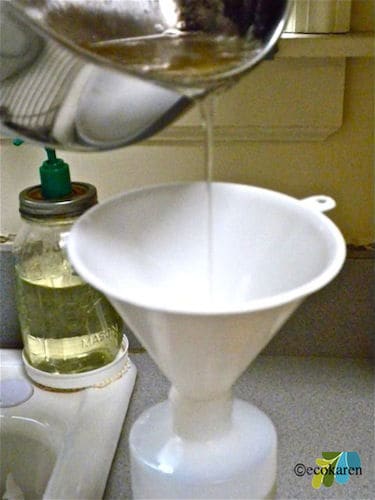 If the soap is too hard, add more water, a teaspoon at a time, and heat again. See how one of my concoctions solidified too much and became a solid block? That happened when I didn't use water. I thought, "Why add water and add salt to thicken? I'll just skip the water." Yea, that didn't work out that well as you can see.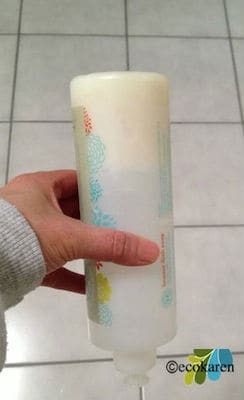









 We don't eat out that often but the holiday season can make me feel like a slave at times. There is the non-stop baking for gifts and cooking marathon for family get togethers. Even holiday parties have become a show-and-tell "Pot-Luck" style that it require me to cook something that takes hours for me to create. And while I cherish the "Whoooo~~"s and "Ahhhhh~~~"s at my delectable creations, I enjoy eating out occasionally and let others do the cooking and serving to spoil me for once.





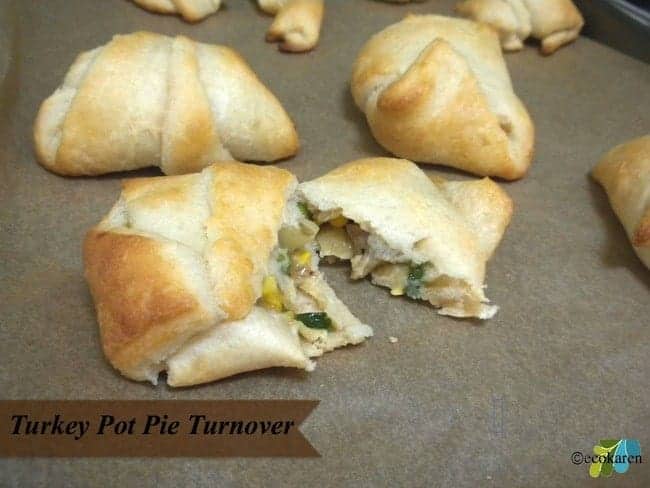 Do you still have leftover turkey in your fridge?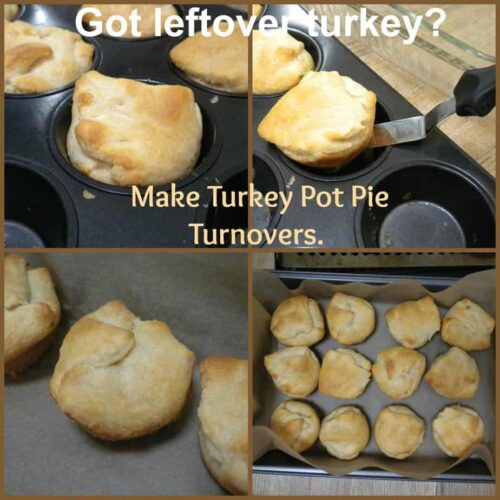

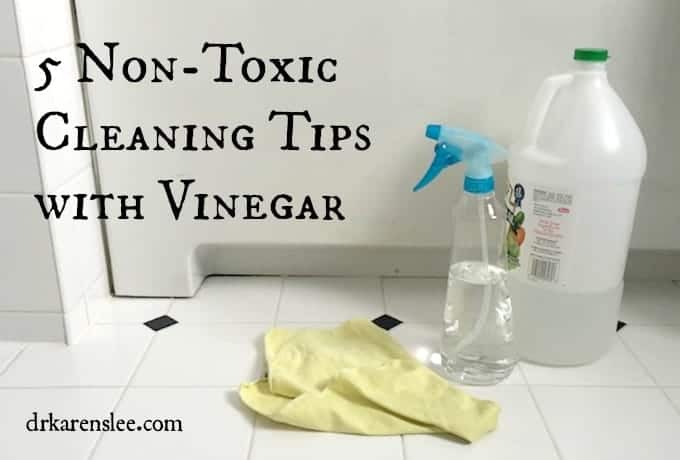 When you have to clean the kitchen or the bathroom, are you using a non-toxic cleaning method? What do you use to clean safely around the kitchen and bathroom?
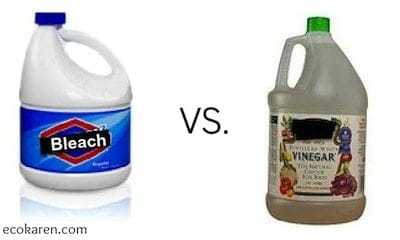 As the flu season approaches, I'm thinking ... "d.i.s.i.n.f.e.c.t." anything I can get my hands on. But I'm wondering if my obsessive vinegar use is good enough to fight those nasty germs that can wreak havoc during winter. My kids get sick at least once, like clockwork, no matter how many times they wash their hands and how religiously they take their vitamins.
 Chlorine bleach is an oxidant and an extremely effective germ killer. Chlorine can kill mold on non-porous surface like tiles but not on porous surfaces like wood and grout. That's why even if you use bleach to clean your bathroom, mold reappears after awhile. The water agent in the bleach, actually makes it grow in the crevices of the grout. Some say, bleach just makes mold turn white but does not kill it.






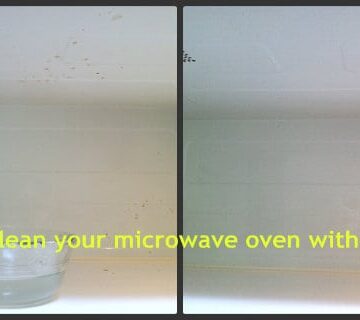
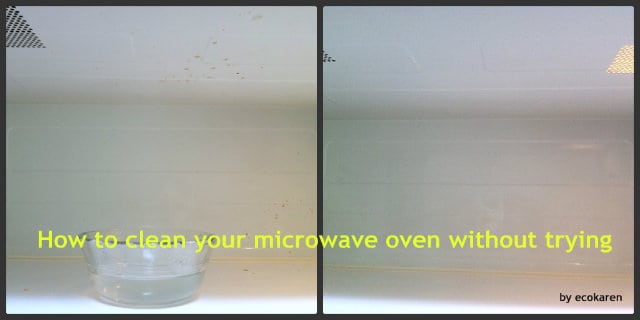
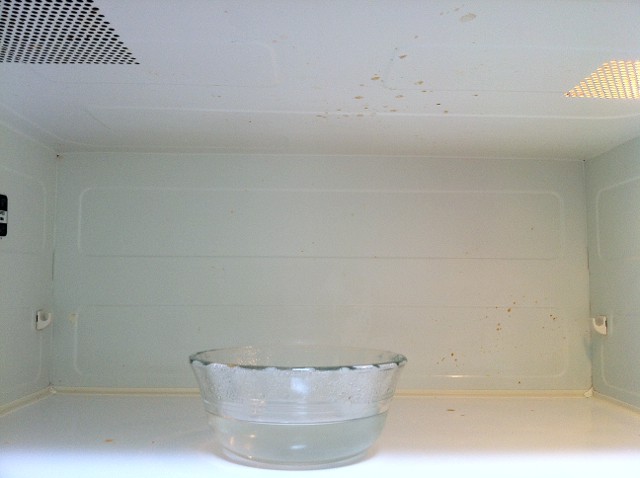
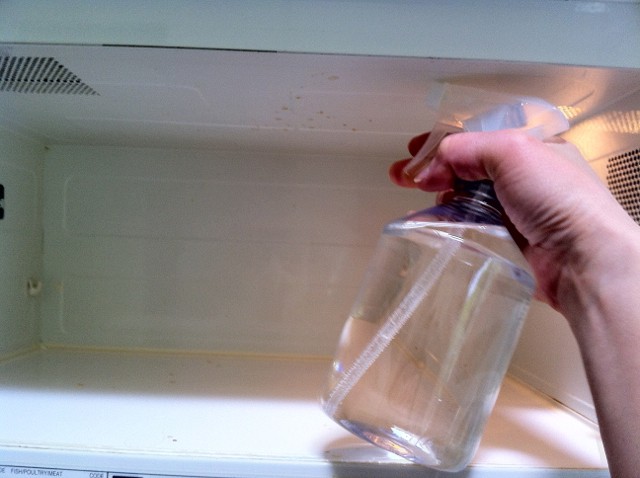
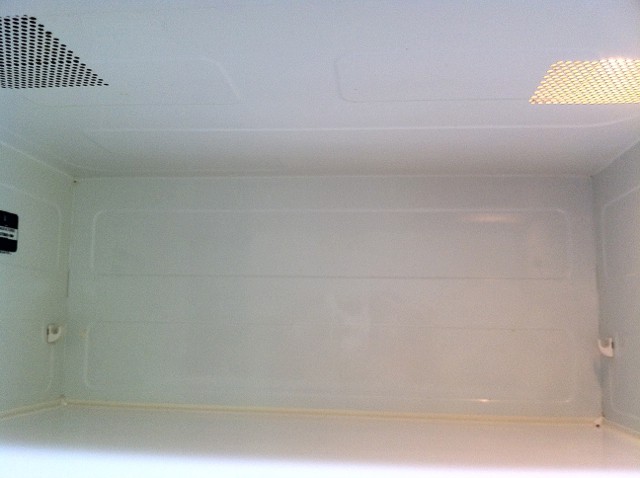
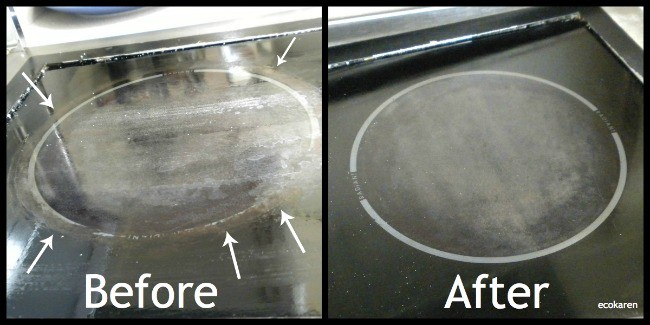 Don't judge me but there is nothing sexy about cleaning a dirty stove top or an oven. It's as glamourous as cleaning a burnt
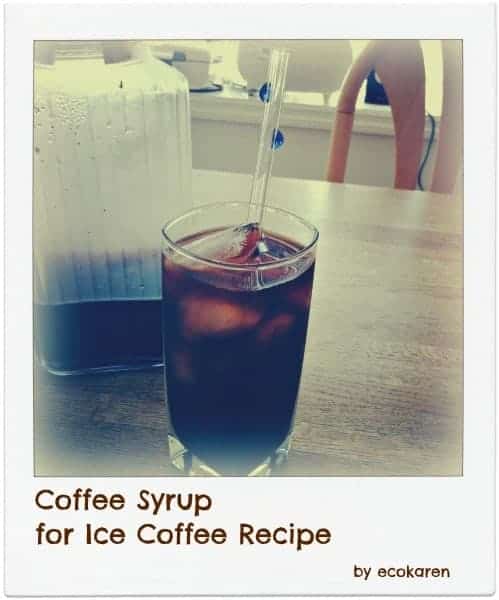 I don't know about you, but by 3 O'Clock, I'm in need of caffeine intervention these days.




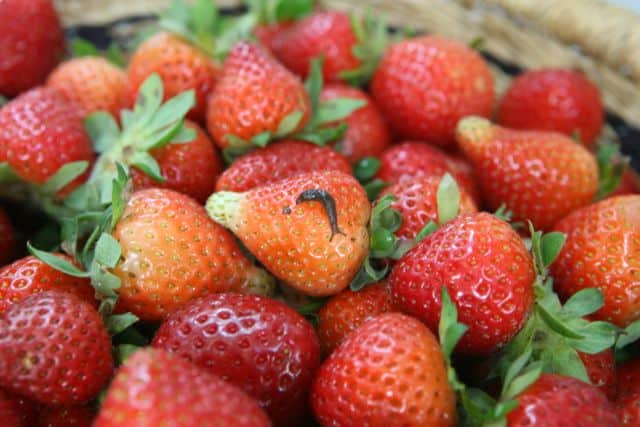



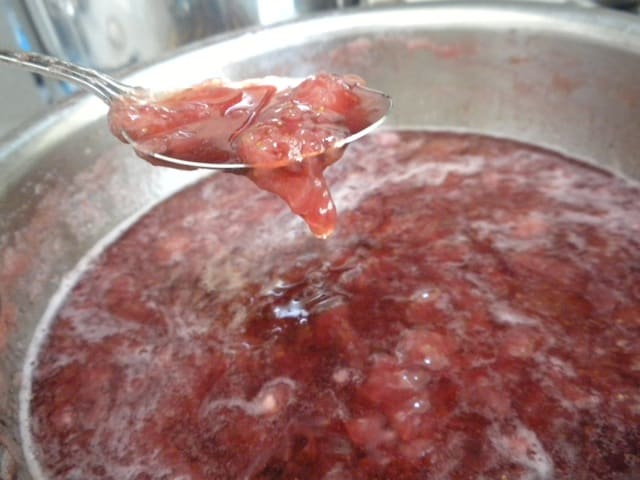
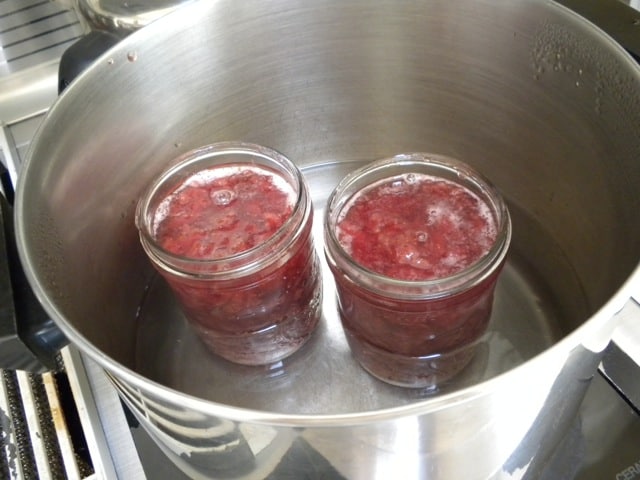
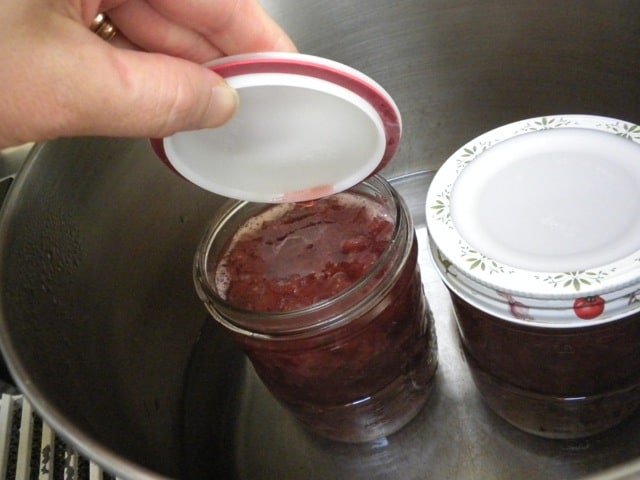
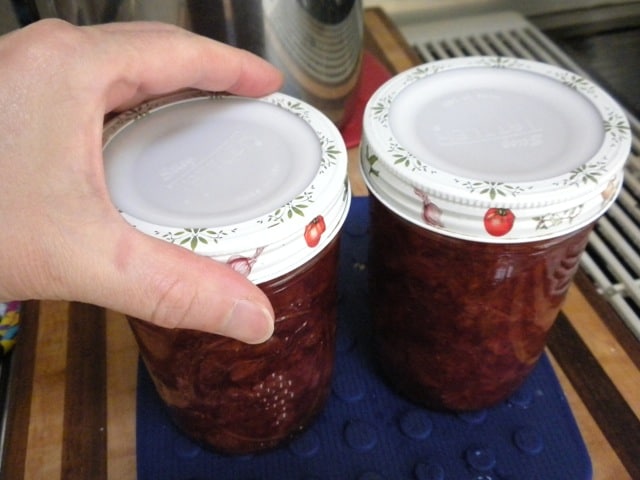
 3. Hull the strawberries. I normally don't hull them when I eat them but in my preserves, I wanted to take out the hard part so I took a small paring knife and cut out the hard stem parts.



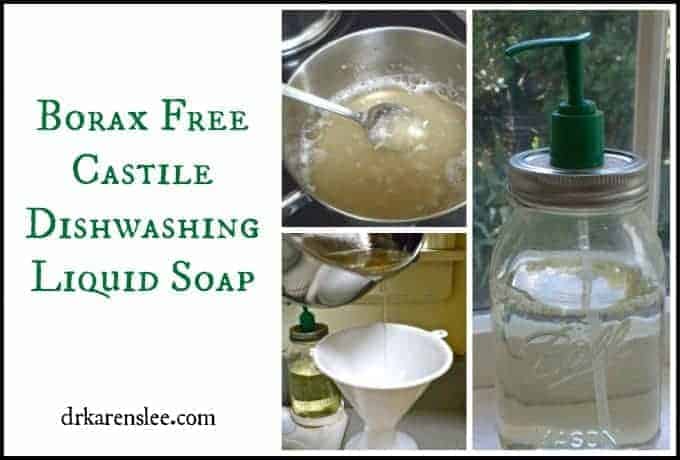
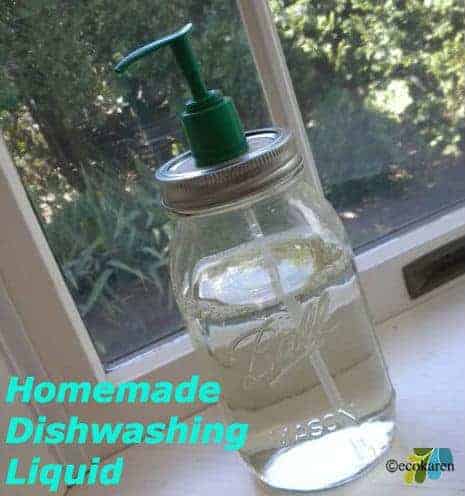
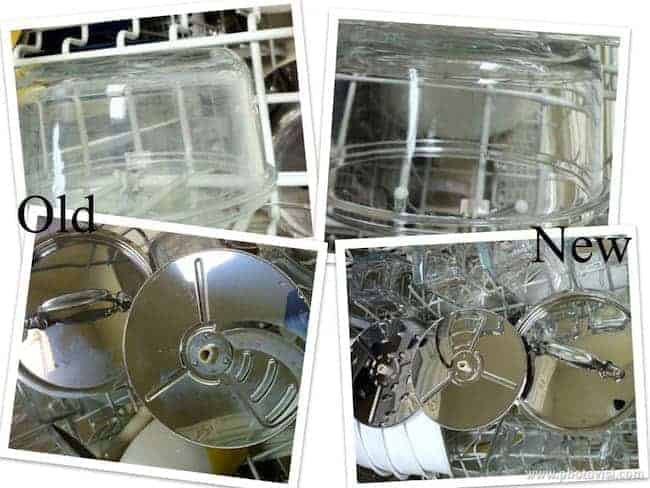 I am so happy to tell you that I've FINALLY came up with the perfect dishwashing detergent without using Borax but with a secret ingredient.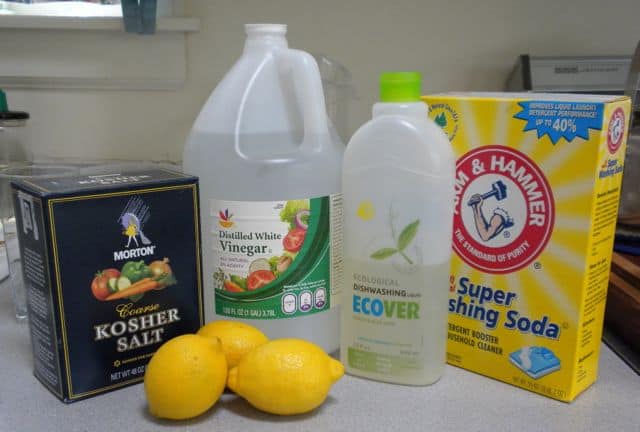















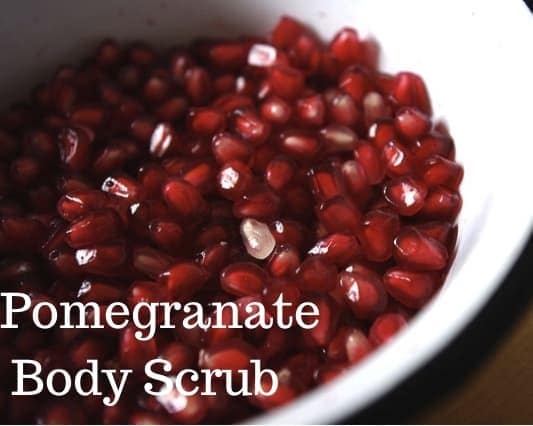 Winter is not the best season for fruits. But pomegranate saves the day when I get sick of eating clementines. After all, pomegranate is more than just the burst of sweet-tart juice but it's also full of vitamin C and potassium, as well as polyphenols, the same cancer-fighting and heart-healthy antioxidants found in red wine.
 I always wonder what this world would be like if we didn't have to wear clothes.
 And this formula is good for High Efficiency front loading washer too. Not only is this recipe cheaper than commercial detergent, it also cleans my front loading washing machine. Remember I posted a while ago how I had to
 CC Image by
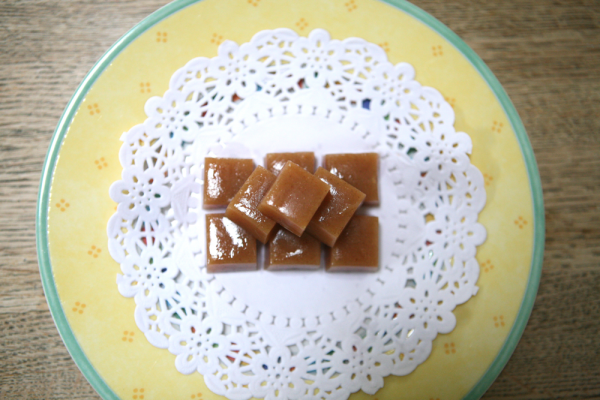
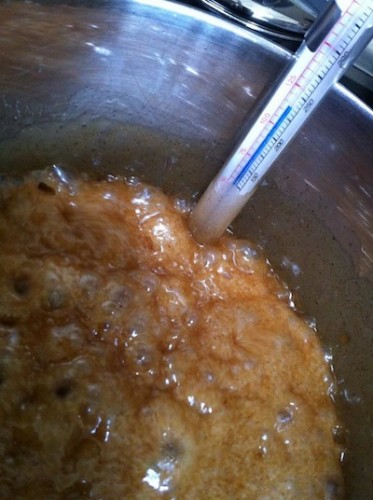
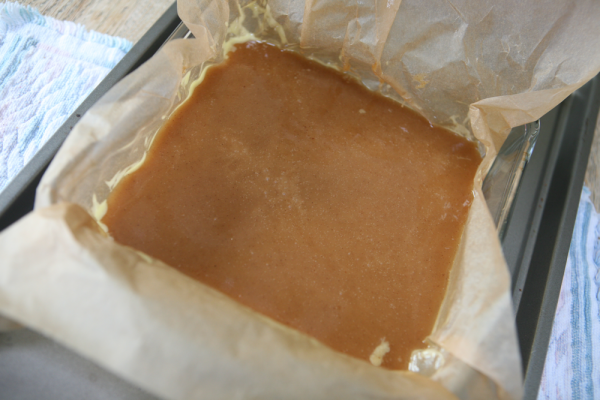
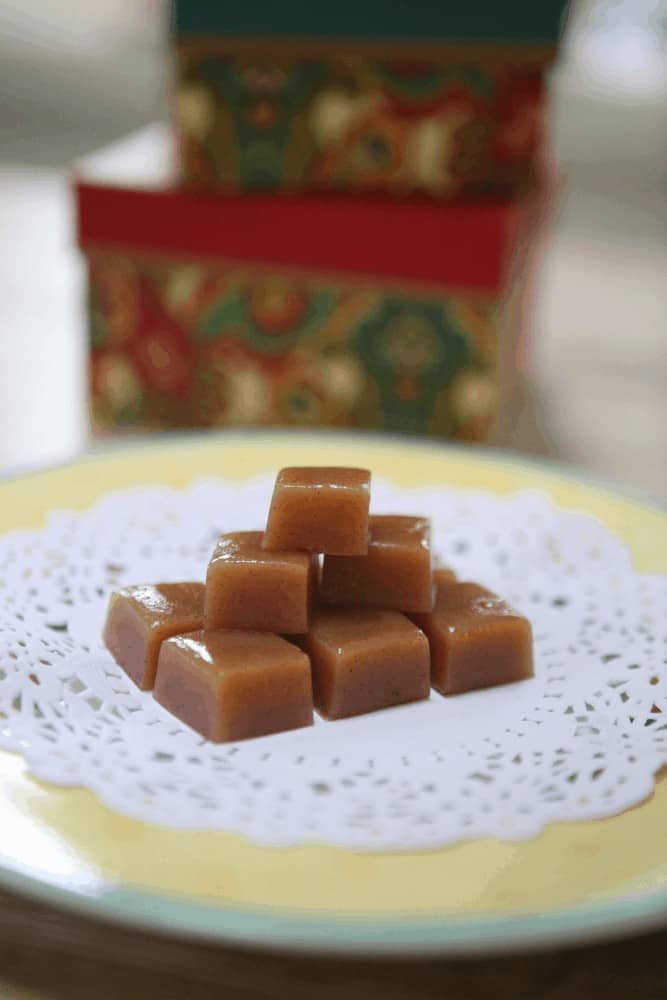

 With all the crafting and blogging, I am always short on time for real dinner lately. But this life saver of a "Dinner in One Pot" meal is my all time favorite. Of course, I don't eat meat anymore so I'll scoop out a bowl before I add the meat and finish it off, while standing over the stove.


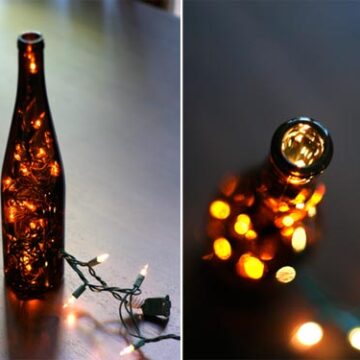
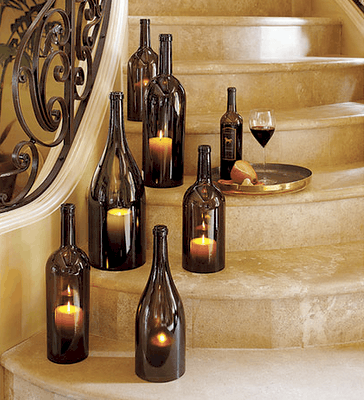 We are not wine connoisseurs and we don't pretend to be. We once opened one of our friend's French wines before its 'time' because we believed it was a total waste of 'time' to wait. Literally. Of course, we were totally wrong. They never let us touch their wine collection after that. So, we let our friends do the honors in ordering wine when we go out.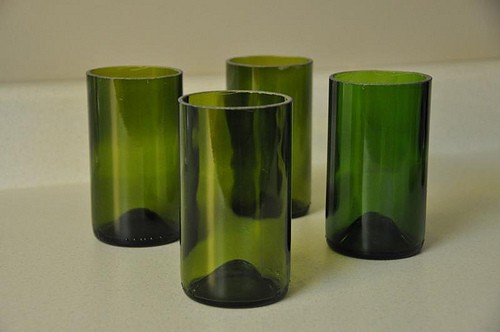


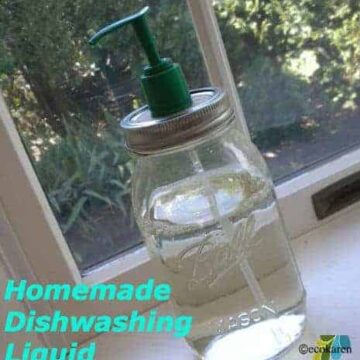
 As you might have guessed, I'm on a Castile Soap kick lately. I use it in my
 OK, the party is over. This middle-aged, pampered, prima donna has to get back to doing the dishes after celebrating her 50th birthday.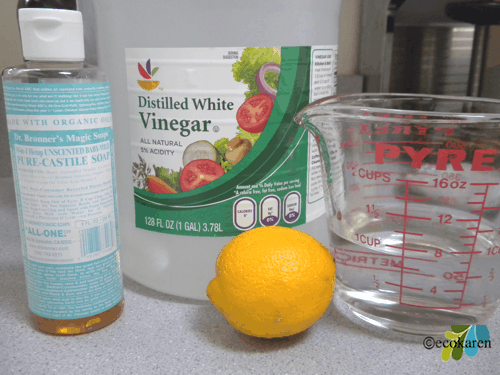

 My son came home for the weekend - a Fall Break for four nights over the Columbus Day Weekend. When the kid calls unexpectedly a week before the break, and says he wants to come home, you spend $400 and put him on the next available flight.